A. A BRIEF HISTORY
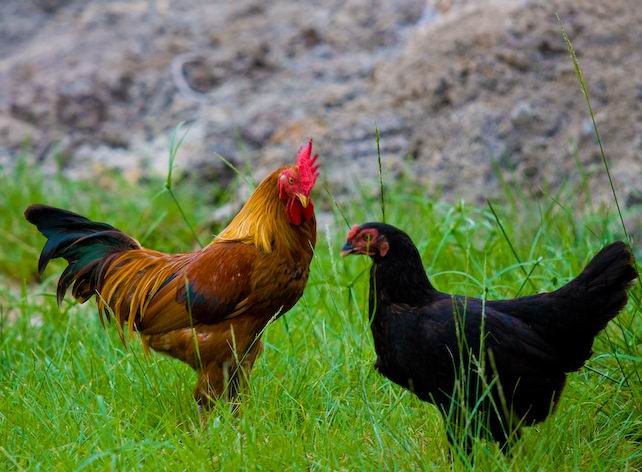
Called broiler broiler, which is a kind of superior race from crosses of chicken nations that have high productivity power, especially in the production of chicken meat. Actually this new broiler popular in Indonesia since the 1980's where the power holders declared panggalakan ruminant meat consumption is more difficult at the time of its existence. Until now, broiler chickens have been known to the public Indonesia with different strengths. Only 5-6 weeks can be harvested. With the maintenance of a relatively short time and profitable, many farmers and ranchers new seasonal emerging in various parts of Indonesia.
2. LIVESTOCK CENTER
Chicken has been developed very rapidly in every country. In Indonesia, efforts are also broiler chickens was found almost in every province
3. J E N I S
With a wide range broiler strains that have circulated in the market, farmers need not worry in determining his choice. Becauseall kinds of strains that have been circulating the same relative productivity.This means that if there is a difference, the difference was not flashy or very small. In determining what strain selection will be maintained, farmers can request a list of productivity or performance of seeds sold in Poultry Shoup. The type strain of broiler that many in the market are: Super 77, tiles 70, ISA, Kim Cross, Lohman 202, Hyline, Vdett, Missouri, Hubbard, Shaver Starbro, Pilch, Yabro, Goto, arcres Arbor, Tatum, Indian river, Hybro, Cornish, Brahma, Langshans, Hypeco-Broiler, Ross, Marshall "m", Euribrid, AA 70, H & N, Sussex, Bromo, CP 707.
4. BENEFITS
Benefits of broiler breeding, among others, include:
1) the provision of animal protein needs
2) leisure days of retirement
3) education and training (training) skills among adolescents
4) savings in the old days
5) provide for the family (profit motive)
5. LOCATION REQUIREMENTS
1) The location is quite far from the hustle / housing residents.
2) location easily accessible from the marketing centers.
3) The location was chosen to be settled, that is not easily distracted by other purposes in addition to farm.
6. TECHNICAL GUIDELINES FOR CULTIVATION
Before raising effort began, a farmer must understand the 3 (three) elements of production, namely: management (management of farm businesses), breeding (breeding) and feeding (fodder / feed)
6.1. Preparation Facilities and Equipment
Perkandangan
Perkandangan system is ideal for poultry businesses races include: the requirements of the temperature range between 32,2-35 degrees C, humidity range between 60-70%, lighting / heating enclosure in accordance with existing rules, the layout of the cage to get morning sun and not against the direction of the winds, the model adapted to the age of the chicken coop, for the pups until the age of 2 weeks or 1 month of taking home boxes, to adolescents chicken ± 1 month to 2 or 3 months on the enclosure box is raised and to be with the adult chicken coop atapun postal bateray cage. For cage construction with materials that do not need expensive, important strong, clean and durable.
Equipment
a. Litter (floor mats)Flooring / litter should be in a dry state, then there is no leaking roof and rain water that goes though there is no wind. Height of 10 cm thick litter, litter material is used a mixture of rice hulls / husks with a little taste of lime and sand, wood shavings or hasi length of 3-5 cm to substitute rice hulls / husks.
b. Broodstock or brooderThis tool is a round or rectangular with a range of 1-3 m area with a heater in the middle. Its function as a hen that warms when newly hatched chicks.
c. Perch (if necessary)Perch to rest / sleep, created by the wall and fell to the ground cultivated dirt that is easily cleaned from the outside. Made closed to avoid the wind and the lower lying of the eggs on.
d. Places to eat, drink and where gritPlaces to eat and drink should be available sufficient, the material of bamboo, aluminum, or anything that does not leak too strong and does not rust. To place grit with a special box
e. Routine toolsTools routinely include medical devices such as chicken: injections, operating scissors, a knife cut a small operation, and others.
6.2. NurseriesLivestock must meet the following requirements:a) cattle healthy and no defects in the physicalb) normal growth and developmentc) cattle originating from a known breeding excellence.d) no attachment stool in his rectum.
Seed Selection and Prospective Parent
There are several technical guidelines for selecting seeds / DOC (Day Old Chicken) / day old chicken:
a. Chicks (DOC) derived from a healthy parent.
b. Fur looks soft and full as well as good growth.
c. There are no defects in the body.
d. Chick experiences a good appetite.
e. Normal body size, size of between 35-40 grams of weight.
f. No stool put diduburnya.
3. Seed treatment and Prospective ParentDone at any time, if there are symptoms of disorder in cattle that was immediately given special attention and given treatment according to the instructions of local Livestock Office or the vet who served in the regions concerned.
6.3. Maintenance
Provision of Food and Beverage
For broiler chicken feeding there are 2 (two) phases, namely starter phase (0-4 weeks of age) and finisher phase (4-6 weeks old).
a. The quality and quantity of feed phase starter is as follows:
- The quality or nutritional content of the feed consists of 22-24% protein, 2.5% fat, crude fiber 4%, Calcium (Ca) 1%, phosphorus (P) 0.7 to 0.9%, ME 2800-3500 kcal.
- The quantity of feed divided / classified into 4 (four) groups, namely the first week (1-7 days old) 17 grams / day / head, the second week (age 8-14 days) 43 grams / day / cow, week-3 ( age 15-21 days) 66 grams / day / cow and week-4 (age 22-29 days) 91 grams / day / cow.So the amount of feed required per head up to the age of 4 weeks of 1520 grams.
b. The quality and quantity of feed finisher phases are as follows:
- The quality or nutrient content of feed consisting of protein from 18.1 to 21.2%, fat 2.5%, 4.5% crude fiber, calcium (Ca) 1%, phosphorus (P) 0.7 to 0.9 % and energy (ME) 2900-3400 Kcal.
- The quantity of feed divided / classified into four age groups are: week 5 (age 30-36 days) 111 grams / day / cow, week-6 (nation of 37-43 days) 129 grams / day / cow, week -7 (age 44-50 days) 146 grams / day / cow and week-8 (age 51-57 days) 161 grams / day / cow. So the total amount of feed per cow at the age of 30-57 days is 3829 grams.
Provision of drinking age adjusted view of the chicken, which are grouped into 2 (two) phases, namely:
a. Starter phase (1-29 days old), drinking water needs fall again on each week, the first week (1-7 days) 1.8 lliter/hari/100 tail; week 2 (8-14 days) 3.1 liter/hari/100 tail, week 3 (15-21 days) 4.5 liter/hari/100 tail and week 4 (22-29 days) 7.7 liters / day / head . So the amount of water needed until the age of 4 weeks istotal of 122.6 liter/100 tail. Provision of drinking water on the first day of added sugars and should be given anti-stress drugs into drinking water. Given the amount of sugar is 50 grams / liter of water.
b. Finisher phase (age 30-57 days), clustered in each week is week 5 (30-36 days) 9.5 liter/hari/100 tails, 6 weeks (37-43 days) 10.9 liter/hari/100 tail, week 7 (44-50 days) 12.7 liter/hari/100 tail and week 8 (51-57 days) 14.1 liters / day / cow. So a total of 30-57 days of drinking water as much as 333.4 liters / day / cow.
4. Cage MaintenanceCleanliness of the cage environment (sanitation) on the farm is disease prevention efforts are the least expensive, it only takes a resilient labor / skilled only. Preventive action by giving the vaccine in cattle with the brand and the dosage according to records on the label of poultry Shoup. In order for the building enclosure can be useful in an effective, then the building enclosure shall be maintained in both the cage was always cleaned and maintained / checked if there are broken parts to be stitched / repaired. Thus the home can be a maximum efficiency without reducing the requirements for livestock enclosure.
7. Pests and diseases
7.1. Disease
A. Dysentery (Coccidiosis)Symptoms: bloody stools and diarrhea, lack of appetite, terkulasi wings, feathers dull shivering.Control: (1) maintain the cleanliness lingkungaan, keeping the litter stays dry, (2) by Tetra Chloine Capsule is given by mouth; Noxal, Trisula Zuco tablets dissolved in water or sulfaqui moxaline, amprolium, cxaldayocox.
2. Newcastle (NCD / New Casstle Diseae)Symptoms: chicken difficulty breathing, coughing, sneezing, grunting arise, lethargic, sleepy eyes, wings terkulasi, sometimes bloody, watery stools greenish-specific symptoms "torticollis" twisting the head and paralyzed uncertain.Control: (1) keeping the environment clean and contaminated equipment virus, Newcastle disease vector animals, chickens that died immediately burnt / discharged, (2) separate the sick chickens, preventing guests enter the farm without any clothes disinfect / sterilized and vaccinated against NCD . Until now there is no cure.
7.2. Pest
A. Mites (kutuan)Symptoms: chicken restless, often pecking and flapping feathers because of itching, decreased appetite, pale and thin.Control: (1) environmental sanitation a good chicken coop; split chicken with a healthy pain, (2) by using Sevin carbonate concentration of 0.15% with a dilute with water and then spray with Sevin carbonate concentration of 0.15% with a dilute with water and then spray ketubuh patients. With the use of insecticide fumigation or pengasepan volatile as Nocotine sulfate or Black leaf 40.
8. P A N E N
8.1. Main resultsFor broiler chickens business, results primarily in the form of chicken meat
8.2. By-productBusiness broiler chickens (broilers) are in the form of feces or droppings and feather pen.
9. POST-HARVEST
9.1. StovingChicken coops prior to cutting, usually placed in shelter cages (Houlding Ground)
9.2. CuttingCutting the chicken carried her neck, the principle that blood came out whole, or about 2/3 the neck cut off and wait 1-2 minutes. This is so good meat quality, not easily contaminated and easily rot.
9.3. Barking or Revocation FineThe trick that has been cut chicken was dipped into hot water (51.7 to 54.4 degrees C). Long immersion broilers is 30 seconds. Fine hairs removed by applying a liquid wax or burned with a blue flame.
9.4. Offal expenditureDubut cut the bottom bit, the entire contents of the abdomen (liver, intestine and gizzard) were excluded. Stomach contents may be sold or be included on the packaging of meat ready to be cooked separately.
9.5. Carcass cutsChicken feet and necks are cut. Tunggir also cut when it is not preferred. After all the viscera are removed and the carcass had been washed, chicken leg / thigh ditekukan below the anus. Then the chicken is cooled and packaged.
10. CROPS CULTIVATION ECONOMIC ANALYSIS
10.1. Cultivation of Business AnalysisCalculation of the cost base and the revenue obtained in this analysis include:
a. types of chickens are raised broiler type (broiler) strain of CP.707.
b. maintenance system implemented by way of intensive in home postal model
c. use of land of 200 m2 with the value of land rents in a 1 ha / year is Rp 1.000.000, -.
d. cage made of bamboo framework, ground floor, walls made of planks of bamboo mat walls of the premises as high as 30 cm, made of plaster bricks and roof tiles used.
e. size of the enclosure, which is 2.5 m high edges, the width of the cage 5 m wide at the edge of the cage and 1.5 m.
f. farm location close to the source of water and electricity.
g. using a heater (brooder) gasolec with fuel gas.
h. lighting with electric light.
i. age of the chicken is starting from 1 day old seedlings
j. litter / cage mat using rice husks.
k. type of feed given is the BR-1 to 0-4 week old chicks and BR-2 to the age of 4-6 weeks.
l. chicken mortality rate of 6% is assumed.
m. long maintenance period of 6 weeks (42 days).
n. average weight per chicken is assumed to 1.75 kg live weight at harvest.
o. price of chicken per kg live weight, which is assumed to Rp 2500, -, although the price range up to Rp 3000, - level rancher / farmer.
p. chicken sold at the age of 6 or 42 days mingu.
q. manure value of Rp 60.000, -.
r. Bank rate is 1.5% / month
s. home depreciation value calculated with the 6-year lifetime of the power and value of the equipment depreciation be calculated with the life of 5 years.
t. calculation of the cost analysis is only counted as basic guidelines, because the value / price are subject to change.
The details of production costs and farm capital are as follows:1) Cost of production infrastructure
a. 200 m2 of ground rent for 2 months Rp. 20.000, -
b. Cage size 20 x 5 m- Bamboo stem @ Rp 180 1250,- Cement 4 zak @ Rp 7000,- Limestone 30 zak @ Rp 6000,- Genting bh 2600 @ USD 90,- Nail battens 5 kg @ Rp 2000,- Nail rafters @ Rp 7000 kg 1800,- Bricks 1000 pieces @ USD 55,- Sand 1 truck- The rope 28 meters @ Rp 5000,- EmploymentUSD. 225.000, -USD. 28,000, -USD. 18,000, -USD. 234 000, -USD. 10.000, -USD. 12 600, -USD. 55.000, -USD. 230,000, -USD. 14,000, -USD. 400.000, -
c. Equipment- Feeder 28 pcs @ Rp 5000,- Places to drink 32 pcs @ Rp 3880,- Shovel 1 pc- Ember 2 pcs @ Rp 2000,- Tong tub of water 1 pc- Dipper 2 pcs @ $ 500,- 1 pc of the gas tube- 1 pc Thermometer- Regulator 1 pc- Brooder (gasolec) 1 pcs- The rope hanging food tmp 120 m @ $ 500, -USD. 140.000, -USD. 124 000, -USD. 7000, -USD. 4,000, -USD. 15.000, -USD. 1000, -USD. 250.000, -USD. 2000, -USD. 52 500, -USD. 15.000, -USD. 60.000, -
The number of production infrastructure cost Rp. 2.052 million, -
2) Cost of production facilities
a. Seedlings DOC 1000 bh @ USD 900, - USD. 900.000, -
b. Feed and drugs- BR-1 31 zak (0-4 weeks) @ Rp 36,000,- 2 BR-34 zak (4-6 mingu) @ USD 34 000,- Drugs @ $ 150, -/ekorUSD. 1.116 million, -USD. 1.156 million, -USD. 150.000, -
c. maintain employment 1.5 bln @ Rp 105.000, - Rp. 157 500, -
d. Other- Rice bran base enclosure 1 truck @ Rp 60.000, -- Old gunny bags of 32 @ $ 300, -- Electricity consumption for 0-6 weeks- Use of gas Rp. 10.000, -USD. 60.000, -USD. 2400, -USD. 7000, -USD. 35.000, -
The number of production infrastructure cost Rp. 3.5839 million, -
3) Cost of production
a. 200 m2 of ground rent for 2 months Rp. 20.000, -
b. Shrinkage value of production infrastructure / 2 months- Enclosure- Equipment Rp 805 660, -: 30USD. 51 109, -USD. 26 856, -
c. Seedlings tail DOC 1000 Rp. 900.000, -
d. Feed and medicine Rp. 2.422 million, -
e. Labor Rp. 157 500, -
f. others Rp. 104 400, -
g. Capital interest of 1.5% per month of Rp. 84 543, -
h. Capital of Rp 1.5 months months. 126 815, -
The number of production infrastructure cost Rp. 3.80868 million, -
4) Revenue
a. Total production 1000X94% X1, 75 kg X Rp 2500, - USD. 4.1125 million, -
b. Manure value of Rp. 60.000, -
c. The total revenue of Rp. 4.1725 million, -
d. Profit of Rp. 363 820, -
5) Parameter feasibility
a. BEP Production Volume = 870 tail
b. BEP Production Price Rp. 3.316 million, -
c. B / C Ratio = 1.09
d. ROI = 6.45%
e. Ratio of profit to revenue = 8.71%
f. Rate of return = 2.6 yr.
10.2. Agribusiness Opportunity OverviewProspects for the agribusiness poultry broiler farms is good enough where market demand is increasing, along with public awareness of the importance of animal nutrition. Production of broiler chickens is currently growing rapidly and the market opportunities that can be reliable
Called broiler broiler, which is a kind of superior race from crosses of chicken nations that have high productivity power, especially in the production of chicken meat. Actually this new broiler popular in Indonesia since the 1980's where the power holders declared panggalakan ruminant meat consumption is more difficult at the time of its existence. Until now, broiler chickens have been known to the public Indonesia with different strengths. Only 5-6 weeks can be harvested. With the maintenance of a relatively short time and profitable, many farmers and ranchers new seasonal emerging in various parts of Indonesia.
2. LIVESTOCK CENTER
Chicken has been developed very rapidly in every country. In Indonesia, efforts are also broiler chickens was found almost in every province
3. J E N I S
With a wide range broiler strains that have circulated in the market, farmers need not worry in determining his choice. Becauseall kinds of strains that have been circulating the same relative productivity.This means that if there is a difference, the difference was not flashy or very small. In determining what strain selection will be maintained, farmers can request a list of productivity or performance of seeds sold in Poultry Shoup. The type strain of broiler that many in the market are: Super 77, tiles 70, ISA, Kim Cross, Lohman 202, Hyline, Vdett, Missouri, Hubbard, Shaver Starbro, Pilch, Yabro, Goto, arcres Arbor, Tatum, Indian river, Hybro, Cornish, Brahma, Langshans, Hypeco-Broiler, Ross, Marshall "m", Euribrid, AA 70, H & N, Sussex, Bromo, CP 707.
4. BENEFITS
Benefits of broiler breeding, among others, include:
1) the provision of animal protein needs
2) leisure days of retirement
3) education and training (training) skills among adolescents
4) savings in the old days
5) provide for the family (profit motive)
5. LOCATION REQUIREMENTS
1) The location is quite far from the hustle / housing residents.
2) location easily accessible from the marketing centers.
3) The location was chosen to be settled, that is not easily distracted by other purposes in addition to farm.
6. TECHNICAL GUIDELINES FOR CULTIVATION
Before raising effort began, a farmer must understand the 3 (three) elements of production, namely: management (management of farm businesses), breeding (breeding) and feeding (fodder / feed)
6.1. Preparation Facilities and Equipment
Perkandangan
Perkandangan system is ideal for poultry businesses races include: the requirements of the temperature range between 32,2-35 degrees C, humidity range between 60-70%, lighting / heating enclosure in accordance with existing rules, the layout of the cage to get morning sun and not against the direction of the winds, the model adapted to the age of the chicken coop, for the pups until the age of 2 weeks or 1 month of taking home boxes, to adolescents chicken ± 1 month to 2 or 3 months on the enclosure box is raised and to be with the adult chicken coop atapun postal bateray cage. For cage construction with materials that do not need expensive, important strong, clean and durable.
Equipment
a. Litter (floor mats)Flooring / litter should be in a dry state, then there is no leaking roof and rain water that goes though there is no wind. Height of 10 cm thick litter, litter material is used a mixture of rice hulls / husks with a little taste of lime and sand, wood shavings or hasi length of 3-5 cm to substitute rice hulls / husks.
b. Broodstock or brooderThis tool is a round or rectangular with a range of 1-3 m area with a heater in the middle. Its function as a hen that warms when newly hatched chicks.
c. Perch (if necessary)Perch to rest / sleep, created by the wall and fell to the ground cultivated dirt that is easily cleaned from the outside. Made closed to avoid the wind and the lower lying of the eggs on.
d. Places to eat, drink and where gritPlaces to eat and drink should be available sufficient, the material of bamboo, aluminum, or anything that does not leak too strong and does not rust. To place grit with a special box
e. Routine toolsTools routinely include medical devices such as chicken: injections, operating scissors, a knife cut a small operation, and others.
6.2. NurseriesLivestock must meet the following requirements:a) cattle healthy and no defects in the physicalb) normal growth and developmentc) cattle originating from a known breeding excellence.d) no attachment stool in his rectum.
Seed Selection and Prospective Parent
There are several technical guidelines for selecting seeds / DOC (Day Old Chicken) / day old chicken:
a. Chicks (DOC) derived from a healthy parent.
b. Fur looks soft and full as well as good growth.
c. There are no defects in the body.
d. Chick experiences a good appetite.
e. Normal body size, size of between 35-40 grams of weight.
f. No stool put diduburnya.
3. Seed treatment and Prospective ParentDone at any time, if there are symptoms of disorder in cattle that was immediately given special attention and given treatment according to the instructions of local Livestock Office or the vet who served in the regions concerned.
6.3. Maintenance
Provision of Food and Beverage
For broiler chicken feeding there are 2 (two) phases, namely starter phase (0-4 weeks of age) and finisher phase (4-6 weeks old).
a. The quality and quantity of feed phase starter is as follows:
- The quality or nutritional content of the feed consists of 22-24% protein, 2.5% fat, crude fiber 4%, Calcium (Ca) 1%, phosphorus (P) 0.7 to 0.9%, ME 2800-3500 kcal.
- The quantity of feed divided / classified into 4 (four) groups, namely the first week (1-7 days old) 17 grams / day / head, the second week (age 8-14 days) 43 grams / day / cow, week-3 ( age 15-21 days) 66 grams / day / cow and week-4 (age 22-29 days) 91 grams / day / cow.So the amount of feed required per head up to the age of 4 weeks of 1520 grams.
b. The quality and quantity of feed finisher phases are as follows:
- The quality or nutrient content of feed consisting of protein from 18.1 to 21.2%, fat 2.5%, 4.5% crude fiber, calcium (Ca) 1%, phosphorus (P) 0.7 to 0.9 % and energy (ME) 2900-3400 Kcal.
- The quantity of feed divided / classified into four age groups are: week 5 (age 30-36 days) 111 grams / day / cow, week-6 (nation of 37-43 days) 129 grams / day / cow, week -7 (age 44-50 days) 146 grams / day / cow and week-8 (age 51-57 days) 161 grams / day / cow. So the total amount of feed per cow at the age of 30-57 days is 3829 grams.
Provision of drinking age adjusted view of the chicken, which are grouped into 2 (two) phases, namely:
a. Starter phase (1-29 days old), drinking water needs fall again on each week, the first week (1-7 days) 1.8 lliter/hari/100 tail; week 2 (8-14 days) 3.1 liter/hari/100 tail, week 3 (15-21 days) 4.5 liter/hari/100 tail and week 4 (22-29 days) 7.7 liters / day / head . So the amount of water needed until the age of 4 weeks istotal of 122.6 liter/100 tail. Provision of drinking water on the first day of added sugars and should be given anti-stress drugs into drinking water. Given the amount of sugar is 50 grams / liter of water.
b. Finisher phase (age 30-57 days), clustered in each week is week 5 (30-36 days) 9.5 liter/hari/100 tails, 6 weeks (37-43 days) 10.9 liter/hari/100 tail, week 7 (44-50 days) 12.7 liter/hari/100 tail and week 8 (51-57 days) 14.1 liters / day / cow. So a total of 30-57 days of drinking water as much as 333.4 liters / day / cow.
4. Cage MaintenanceCleanliness of the cage environment (sanitation) on the farm is disease prevention efforts are the least expensive, it only takes a resilient labor / skilled only. Preventive action by giving the vaccine in cattle with the brand and the dosage according to records on the label of poultry Shoup. In order for the building enclosure can be useful in an effective, then the building enclosure shall be maintained in both the cage was always cleaned and maintained / checked if there are broken parts to be stitched / repaired. Thus the home can be a maximum efficiency without reducing the requirements for livestock enclosure.
7. Pests and diseases
7.1. Disease
A. Dysentery (Coccidiosis)Symptoms: bloody stools and diarrhea, lack of appetite, terkulasi wings, feathers dull shivering.Control: (1) maintain the cleanliness lingkungaan, keeping the litter stays dry, (2) by Tetra Chloine Capsule is given by mouth; Noxal, Trisula Zuco tablets dissolved in water or sulfaqui moxaline, amprolium, cxaldayocox.
2. Newcastle (NCD / New Casstle Diseae)Symptoms: chicken difficulty breathing, coughing, sneezing, grunting arise, lethargic, sleepy eyes, wings terkulasi, sometimes bloody, watery stools greenish-specific symptoms "torticollis" twisting the head and paralyzed uncertain.Control: (1) keeping the environment clean and contaminated equipment virus, Newcastle disease vector animals, chickens that died immediately burnt / discharged, (2) separate the sick chickens, preventing guests enter the farm without any clothes disinfect / sterilized and vaccinated against NCD . Until now there is no cure.
7.2. Pest
A. Mites (kutuan)Symptoms: chicken restless, often pecking and flapping feathers because of itching, decreased appetite, pale and thin.Control: (1) environmental sanitation a good chicken coop; split chicken with a healthy pain, (2) by using Sevin carbonate concentration of 0.15% with a dilute with water and then spray with Sevin carbonate concentration of 0.15% with a dilute with water and then spray ketubuh patients. With the use of insecticide fumigation or pengasepan volatile as Nocotine sulfate or Black leaf 40.
8. P A N E N
8.1. Main resultsFor broiler chickens business, results primarily in the form of chicken meat
8.2. By-productBusiness broiler chickens (broilers) are in the form of feces or droppings and feather pen.
9. POST-HARVEST
9.1. StovingChicken coops prior to cutting, usually placed in shelter cages (Houlding Ground)
9.2. CuttingCutting the chicken carried her neck, the principle that blood came out whole, or about 2/3 the neck cut off and wait 1-2 minutes. This is so good meat quality, not easily contaminated and easily rot.
9.3. Barking or Revocation FineThe trick that has been cut chicken was dipped into hot water (51.7 to 54.4 degrees C). Long immersion broilers is 30 seconds. Fine hairs removed by applying a liquid wax or burned with a blue flame.
9.4. Offal expenditureDubut cut the bottom bit, the entire contents of the abdomen (liver, intestine and gizzard) were excluded. Stomach contents may be sold or be included on the packaging of meat ready to be cooked separately.
9.5. Carcass cutsChicken feet and necks are cut. Tunggir also cut when it is not preferred. After all the viscera are removed and the carcass had been washed, chicken leg / thigh ditekukan below the anus. Then the chicken is cooled and packaged.
10. CROPS CULTIVATION ECONOMIC ANALYSIS
10.1. Cultivation of Business AnalysisCalculation of the cost base and the revenue obtained in this analysis include:
a. types of chickens are raised broiler type (broiler) strain of CP.707.
b. maintenance system implemented by way of intensive in home postal model
c. use of land of 200 m2 with the value of land rents in a 1 ha / year is Rp 1.000.000, -.
d. cage made of bamboo framework, ground floor, walls made of planks of bamboo mat walls of the premises as high as 30 cm, made of plaster bricks and roof tiles used.
e. size of the enclosure, which is 2.5 m high edges, the width of the cage 5 m wide at the edge of the cage and 1.5 m.
f. farm location close to the source of water and electricity.
g. using a heater (brooder) gasolec with fuel gas.
h. lighting with electric light.
i. age of the chicken is starting from 1 day old seedlings
j. litter / cage mat using rice husks.
k. type of feed given is the BR-1 to 0-4 week old chicks and BR-2 to the age of 4-6 weeks.
l. chicken mortality rate of 6% is assumed.
m. long maintenance period of 6 weeks (42 days).
n. average weight per chicken is assumed to 1.75 kg live weight at harvest.
o. price of chicken per kg live weight, which is assumed to Rp 2500, -, although the price range up to Rp 3000, - level rancher / farmer.
p. chicken sold at the age of 6 or 42 days mingu.
q. manure value of Rp 60.000, -.
r. Bank rate is 1.5% / month
s. home depreciation value calculated with the 6-year lifetime of the power and value of the equipment depreciation be calculated with the life of 5 years.
t. calculation of the cost analysis is only counted as basic guidelines, because the value / price are subject to change.
The details of production costs and farm capital are as follows:1) Cost of production infrastructure
a. 200 m2 of ground rent for 2 months Rp. 20.000, -
b. Cage size 20 x 5 m- Bamboo stem @ Rp 180 1250,- Cement 4 zak @ Rp 7000,- Limestone 30 zak @ Rp 6000,- Genting bh 2600 @ USD 90,- Nail battens 5 kg @ Rp 2000,- Nail rafters @ Rp 7000 kg 1800,- Bricks 1000 pieces @ USD 55,- Sand 1 truck- The rope 28 meters @ Rp 5000,- EmploymentUSD. 225.000, -USD. 28,000, -USD. 18,000, -USD. 234 000, -USD. 10.000, -USD. 12 600, -USD. 55.000, -USD. 230,000, -USD. 14,000, -USD. 400.000, -
c. Equipment- Feeder 28 pcs @ Rp 5000,- Places to drink 32 pcs @ Rp 3880,- Shovel 1 pc- Ember 2 pcs @ Rp 2000,- Tong tub of water 1 pc- Dipper 2 pcs @ $ 500,- 1 pc of the gas tube- 1 pc Thermometer- Regulator 1 pc- Brooder (gasolec) 1 pcs- The rope hanging food tmp 120 m @ $ 500, -USD. 140.000, -USD. 124 000, -USD. 7000, -USD. 4,000, -USD. 15.000, -USD. 1000, -USD. 250.000, -USD. 2000, -USD. 52 500, -USD. 15.000, -USD. 60.000, -
The number of production infrastructure cost Rp. 2.052 million, -
2) Cost of production facilities
a. Seedlings DOC 1000 bh @ USD 900, - USD. 900.000, -
b. Feed and drugs- BR-1 31 zak (0-4 weeks) @ Rp 36,000,- 2 BR-34 zak (4-6 mingu) @ USD 34 000,- Drugs @ $ 150, -/ekorUSD. 1.116 million, -USD. 1.156 million, -USD. 150.000, -
c. maintain employment 1.5 bln @ Rp 105.000, - Rp. 157 500, -
d. Other- Rice bran base enclosure 1 truck @ Rp 60.000, -- Old gunny bags of 32 @ $ 300, -- Electricity consumption for 0-6 weeks- Use of gas Rp. 10.000, -USD. 60.000, -USD. 2400, -USD. 7000, -USD. 35.000, -
The number of production infrastructure cost Rp. 3.5839 million, -
3) Cost of production
a. 200 m2 of ground rent for 2 months Rp. 20.000, -
b. Shrinkage value of production infrastructure / 2 months- Enclosure- Equipment Rp 805 660, -: 30USD. 51 109, -USD. 26 856, -
c. Seedlings tail DOC 1000 Rp. 900.000, -
d. Feed and medicine Rp. 2.422 million, -
e. Labor Rp. 157 500, -
f. others Rp. 104 400, -
g. Capital interest of 1.5% per month of Rp. 84 543, -
h. Capital of Rp 1.5 months months. 126 815, -
The number of production infrastructure cost Rp. 3.80868 million, -
4) Revenue
a. Total production 1000X94% X1, 75 kg X Rp 2500, - USD. 4.1125 million, -
b. Manure value of Rp. 60.000, -
c. The total revenue of Rp. 4.1725 million, -
d. Profit of Rp. 363 820, -
5) Parameter feasibility
a. BEP Production Volume = 870 tail
b. BEP Production Price Rp. 3.316 million, -
c. B / C Ratio = 1.09
d. ROI = 6.45%
e. Ratio of profit to revenue = 8.71%
f. Rate of return = 2.6 yr.
10.2. Agribusiness Opportunity OverviewProspects for the agribusiness poultry broiler farms is good enough where market demand is increasing, along with public awareness of the importance of animal nutrition. Production of broiler chickens is currently growing rapidly and the market opportunities that can be reliable